Push-Back Storage is gaining attention as warehouses demand higher density without sacrificing practical access. Grand View Research valued the global warehouse automation market at approximately USD 21.7 billion in 2023. It also projects strong growth through 2030. MHI’s 2024 Annual Industry Report expects robotics and automation adoption to rise from 23% currently to 37% within two years. These figures do not prove every warehouse needs automation. They do show why storage design deserves closer evaluation.
This guide examines the Top 10 Push-Back Storage Systems for pallet-based operations. Each system is assessed through storage density, loading speed, pallet compatibility, safety features, maintenance demands, and inventory rotation. Picture a four-deep lane holding seasonal beverage pallets. A forklift loads from one side, while nested carts or rollers move earlier pallets forward. The result can be valuable space savings, but poor pallet quality may create jams, product damage, or unsafe retrieval.
Gwynne Richards, author of Warehouse Management, states, “Warehouse space is a strategic asset, not merely a cost.” That principle fits Push-Back Storage well. However, no ranking is perfect. A system performing brilliantly in a cold-storage facility may disappoint in a high-throughput distribution center. Rack depth, load weight, aisle width, and operator discipline change the outcome. This comparison therefore avoids treating density as the only measure of success. Sometimes, the less impressive-looking system delivers better control. That is worth remembering.
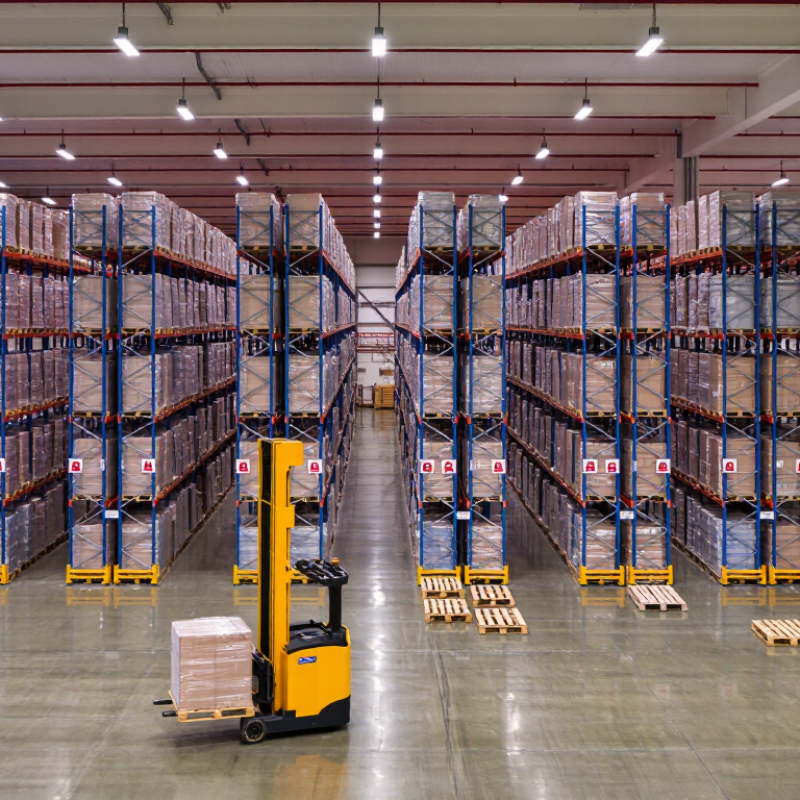
A push-back storage system is a high-density pallet rack designed for last-in, first-out handling. It uses nested carts or wheeled platforms inside each storage lane. Each cart rides on rails that slope gently toward the loading aisle. A forklift places a pallet on the first cart and pushes it backward. The pallet behind it moves deeper into the lane. When the front pallet leaves, gravity brings the next pallet forward. Simple movement, but not careless movement.
Operators usually load and retrieve goods from the same aisle. This arrangement reduces travel distance and can increase usable floor capacity. It suits warehouses holding several pallets of the same product. It is less suitable for products requiring strict first-in, first-out rotation. A practical assessment should check pallet quality, load weight, lane depth, and forklift clearance. Rails must remain aligned, and damaged carts should be removed from service. Small defects matter.
The system works through controlled gravity, not powered conveyors. That keeps the design comparatively simple, yet it creates operating responsibilities. A forklift must enter squarely and place each pallet evenly. Uneven loading can increase friction, damage rails, or leave pallets unstable. The theory looks clean; real warehouses are messier. Temperature changes, mixed pallet sizes, and rushed drivers can reduce performance. I would not choose a lane layout from storage density alone. Product rotation, inspection access, and clearance also deserve attention.
What Are the Main Types of Push-Back Storage Systems?
Push-back storage systems mainly differ by their loading mechanism and storage depth. Cart-based systems use nested carts that move along inclined rails. Each pallet pushes the previous one deeper into the lane. This design supports last-in, first-out access and works well for products handled in batches. Roller-based systems use wheel or roller tracks instead of carts. They can provide smoother movement for heavier pallets, but track cleanliness becomes important.
Storage depth creates another practical classification. Two-deep systems offer faster access and simpler pallet control. Three- to six-deep systems provide greater density but require more careful stock planning. A deeper lane may look efficient on paper. However, it can increase travel time and make older inventory harder to reach. Some systems also use different rail layouts for standard pallets or unusual load sizes.
Tips: Check pallet weight, dimensions, and bottom-board quality before choosing the system. Test one loaded lane with real equipment. Small differences in pallet condition can affect movement. Keep product groups consistent within each lane. I would not assume the deepest option is automatically the best. A warehouse with frequent product changes may benefit from shallower lanes, even when floor space is limited. Regular inspections should check rails, carts, rollers, uprights, and pallet alignment. Clear operating procedures help reduce impact damage and loading errors.
| No. | Push-Back Storage System | Main Type | Typical Storage Depth | Pallets per Lane | Loading Method | Inventory Method | Best Application | Main Advantage |
|---|---|---|---|---|---|---|---|---|
| 1 | Two-Deep Cart Push-Back Rack | Cart-assisted push-back | 2 pallet positions | 2 | Forklift places the first pallet on a wheeled cart and pushes it to the rear. | Last-in, first-out (LIFO) | Fast-moving goods requiring moderate density. | Simple operation and good selectivity for shallow lanes. |
| 2 | Three-Deep Cart Push-Back Rack | Cart-assisted push-back | 3 pallet positions | 3 | Each new pallet pushes the previous pallets deeper into the lane. | Last-in, first-out (LIFO) | High-density storage with several pallets per SKU. | Higher density than two-deep storage without drive-in access. |
| 3 | Four-Deep Cart Push-Back Rack | Cart-assisted push-back | 4 pallet positions | 4 | Forklift loads from the aisle while carts support pallet movement. | Last-in, first-out (LIFO) | Seasonal inventory and high-volume reserve storage. | Strong cube utilization with relatively quick access from one aisle. |
| 4 | Five-Deep Cart Push-Back Rack | Deep-lane cart system | 5 pallet positions | 5 | Successive pallets are pushed toward the back of the lane. | Last-in, first-out (LIFO) | Large quantities of relatively uniform products. | Very high storage density where selectivity is less critical. |
| 5 | Gravity Roller Push-Back Rack | Roller-bed push-back | 2–5 pallet positions | 2–5 | Pallets move on inclined gravity rollers as the lane is loaded or unloaded. | Last-in, first-out (LIFO) | Standardized pallets and medium-to-high throughput operations. | Smooth pallet movement with fewer moving cart components. |
| 6 | Forklift-Set Push-Back Rack | Forklift-assisted push-back | 2–4 pallet positions | 2–4 | The forklift directly pushes pallets or carrier platforms into the lane. | Last-in, first-out (LIFO) | Facilities seeking a lower-equipment solution. | Uses common material-handling equipment and can reduce system complexity. |
| 7 | Pallet-Flow-Compatible Push-Back Rack | Hybrid dynamic storage | 2–4 pallet positions | 2–4 | Push-back lanes are combined with gravity-fed lanes in the same storage plan. | LIFO for push-back; FIFO for flow lanes | Warehouses handling both reserve and date-sensitive inventory. | Balances density with first-in, first-out requirements. |
| 8 | Cold-Storage Push-Back Rack | Temperature-controlled push-back | 2–4 pallet positions | 2–4 | Pallets are loaded from the refrigerated or frozen-storage aisle. | Last-in, first-out (LIFO) | Frozen foods, chilled products, and temperature-sensitive goods. | Reduces aisle space that must be maintained at controlled temperatures. |
| 9 | High-Capacity Push-Back Rack | Heavy-duty push-back | 2–4 pallet positions | 2–4 | Reinforced carts, rollers, or structural components support heavy pallet loads. | Last-in, first-out (LIFO) | Beverage, metal, building-material, and industrial storage. | Supports heavier loads while preserving deep-lane capacity. |
| 10 | Multi-Level Push-Back Rack | Vertical multi-level system | 2–4 pallet positions per level | 2–4 | Push-back lanes are arranged across multiple vertical rack levels. | Last-in, first-out (LIFO) | High-bay warehouses with adequate clear height. | Uses vertical space efficiently and increases pallet positions per floor area. |
Typical depths and capacities vary according to pallet dimensions, load weight, rack height, aisle width, forklift type, and local safety requirements.
The top ten push-back storage systems are best compared by depth, load capacity, and operating pattern. Two-deep systems suit moderate inventory and quick pallet access. Three-deep and four-deep designs increase density without making travel distances excessive. Five-deep systems offer stronger space savings, but forklift operators need tighter control. Six-deep and eight-deep versions support high-volume products with fewer stock-keeping units. Cart-based systems improve load movement, while wheel-based systems can reduce handling friction. Rail-guided systems provide steadier pallet positioning. Heavy-duty systems handle dense loads, and adjustable systems accommodate changing pallet sizes.
Warehouse experience shows that density alone is not the right measure.
Push-back storage normally follows last-in, first-out access, so it fits seasonal or batch inventory better than strict date rotation. The MHI 2024 Annual Industry Report reported that 55% of supply-chain professionals planned to increase technology investment. That investment should include rack inspection, load testing, and operator training.
Small errors matter. A damaged wheel can stop an entire lane.
Selection should begin with real movement data, not a sales diagram. Measure pallet dimensions, daily put-away volume, retrieval frequency, aisle width, and ceiling height. The 2024 Warehousing Costs and Trends Report from the Warehousing Education and Research Council highlights continuing pressure on labor efficiency and operating costs.
A deeper rack may reduce floor use, yet create slower replenishment. That trade-off is easy to underestimate.
I would also test mixed pallets during a site trial. Perfect assumptions rarely survive a busy shift.
Push-back storage systems differ sharply in capacity, access, and operating speed. The best ten configurations include single-depth, two-depth, three-depth, four-depth, and five-depth cart systems, plus roller-bed, wheel-bed, pallet-cart, gravity-assisted, and shuttle-assisted designs.
Single-depth layouts provide the fastest access but use more aisle space. Four- and five-depth layouts hold more pallets within the same footprint, although operators may spend longer retrieving rear loads. They usually follow the last-in, first-out method, which suits products with stable demand and limited lot variation.
Capacity is not determined by storage depth alone.
Pallet dimensions, ceiling height, aisle width, load weight, and turnover rate matter just as much. A three-depth system can outperform a five-depth system when replenishment is frequent. Roller beds often support smoother movement for consistent pallets, while wheel-based designs may reduce resistance and maintenance needs. Shuttle-assisted systems can improve throughput, but their controls and servicing requirements add complexity. Real warehouse trials often reveal gaps between calculated capacity and usable capacity.
Tips:
Measure actual pallet quality before choosing the equipment. Test damaged edges, uneven bottoms, and mixed weights. Leave practical clearance, not only the minimum clearance. Track retrieval time during busy shifts. A layout that looks efficient on paper may slow down at the loading face. My initial preference would be deeper storage, but that choice can fail when every pallet requires rapid access. Review access frequency, safety checks, and operator feedback before finalizing the design.
Choosing a push-back storage system starts with product movement, not catalogue capacity. It suits warehouses storing several pallets per SKU and requiring fast, last-in, first-out access.
The 2024 MHI Annual Industry Report found that 77% of respondents expected to adopt robotics and automation within five years. That trend increases pressure to use every cubic metre wisely.
Measure twice. Confirm pallet dimensions, weight, rack depth, aisle width, and forklift reach.
A practical site survey should record temperature, floor flatness, impact zones, and daily pallet movements. Load ratings must match the actual configuration, not an optimistic estimate.
Operators also need clear training on cart loading, lane entry, and controlled pallet retrieval. The densest design may reduce travel time, but it can create congestion when every lane holds a different SKU.
Maintenance should include weekly visual checks for damaged beams, rails, carts, guides, and safety pins. Inspectors should photograph defects and isolate unsafe locations immediately.
The U.S. Bureau of Labor Statistics reported 1,190 nonfatal warehouse and storage injuries involving days away from work in 2022. That figure does not prove rack failure, but it reinforces the need for disciplined traffic control.
Annual inspections by a competent professional add valuable independent judgment. In practice, maintenance plans often look complete on paper. They still fail when staff skip records during peak seasons.
Review the system after layout changes, collision events, product changes, or unusual noise.
Cart-based systems use nested carts on inclined rails. Roller-based systems use wheels or rollers. Both support dense, last-in, first-out storage.
A forklift places a pallet on the front cart. That pallet pushes earlier pallets deeper into the lane. The design suits batch storage.
Roller tracks can provide smooth movement for heavier pallets. However, dirt can slow the rollers. Track cleanliness matters.
Two-deep lanes offer faster access and simpler control. Three- to six-deep lanes improve density. Deeper lanes may hide older inventory.
No. Frequent product changes may require shallower lanes. Density can look excellent on paper, yet retrieval may become slower.
Check pallet weight, dimensions, and bottom-board quality. Measure aisle width and forklift reach. Test one loaded lane with real equipment.
Keep similar products together within one lane. A lane with mixed items can cause congestion and retrieval mistakes. This planning step is easy to underestimate.
Inspect beams, rails, carts, rollers, guides, safety pins, and pallet alignment weekly. Photograph defects and isolate unsafe locations. Records are often skipped during busy periods.
Operators need instruction on loading, lane entry, pallet retrieval, and controlled forklift movement. Clear procedures reduce impacts and loading errors. Training alone is not enough.
Arrange an independent inspection at least annually. Review the system after collisions, layout changes, product changes, or unusual noise. Waiting for failure is a weak plan.
Push-Back Storage systems are high-density pallet racking solutions designed to improve warehouse space utilization while allowing quick access to multiple stock-keeping units. They operate by placing pallets on nested carts or rolling platforms that move along inclined rails. When a new pallet is loaded, it gently pushes existing pallets deeper into the lane; unloading follows a last-in, first-out sequence. The article explains the main system types, including cart-based, roller-based, and structural configurations, and presents ten leading designs based on accessibility, load capacity, durability, and ease of operation.
It also compares these systems by storage density, throughput, selectivity, and available warehouse space. Businesses can choose the most suitable Push-Back Storage solution by evaluating pallet dimensions, product turnover, load requirements, aisle layout, and budget. Regular inspections, balanced loading, rail and wheel maintenance, clear labeling, and operator training are essential for safe, reliable, and long-term performance.

Maobang Storage