Choosing Boltless Systems for global operations in 2026 requires more than comparing prices and shelf dimensions. Buyers must examine load ratings, material quality, assembly methods, and long-term service conditions. A warehouse in Rotterdam may face humidity, while a distribution center in Dubai may experience intense heat and dust. The same system may not perform equally in both locations.
Reliable decisions begin with verified evidence. Request technical drawings, test reports, coating specifications, and documented load calculations from qualified suppliers. Check whether the stated capacity applies to each shelf level, the complete bay, or a specific installation pattern. Small details matter. Uneven flooring, forklift traffic, and frequent reconfiguration can change performance.
Global buyers should also evaluate supplier experience, quality control, replacement parts, packaging, and delivery reliability. Regional standards and workplace requirements may differ, so local engineering review remains valuable. Certifications can support trust, but they should not replace practical inspection or installation guidance. A reputable supplier should explain limitations clearly, including what the system cannot safely support.
There is no universal best choice. That assumption often causes expensive mistakes. Product photographs may look impressive, yet they reveal little about steel thickness or joint stability. Buyers should compare total ownership costs, not only the initial quotation. This includes freight, labor, maintenance, expansion, and eventual recycling.
A careful selection process may feel slower. It usually prevents disruption later. This guide examines the questions, evidence, and evaluation methods that help international buyers choose Boltless Systems with greater confidence in 2026.
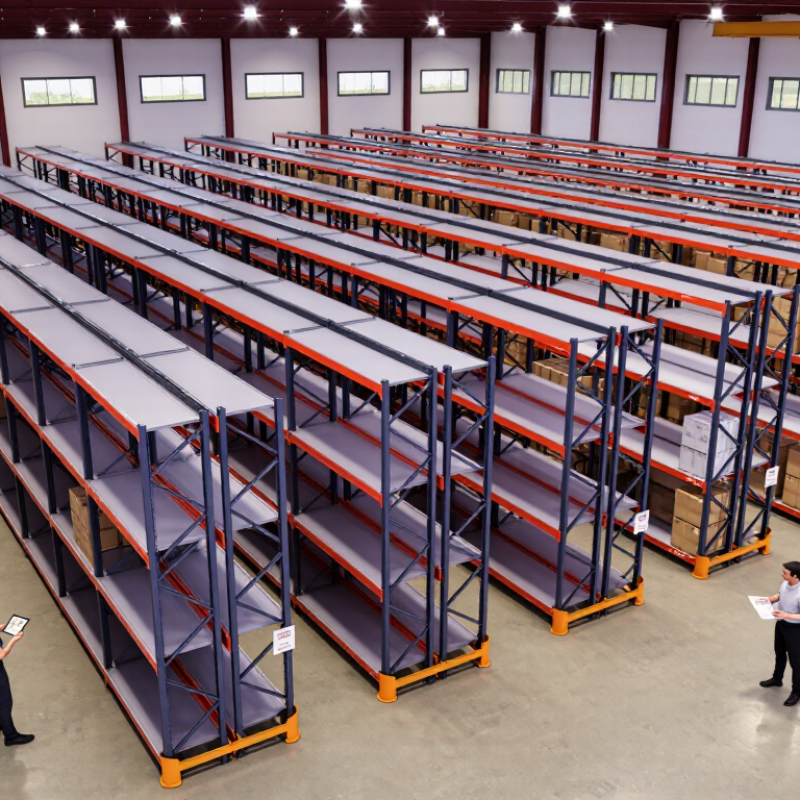
Boltless storage systems use slots, rivets, clips, or interlocking frames instead of traditional nuts and bolts. Shelves usually adjust by height, allowing operators to fit cartons, bins, tools, and spare parts. Assembly needs fewer tools and creates less downtime during relocation. That definition sounds simple. Load paths still matter.
Load paths still matter.
In 2026, buyers may apply these systems in e-commerce warehouses, retail backrooms, workshops, archives, and light manufacturing areas. A 2024 report from the Material Handling Industry found that 55% of supply-chain leaders expected to increase technology investment. Grand View Research projects a 16.1% compound annual growth rate for warehouse automation from 2024 to 2030.
Boltless shelving can support that shift, especially beside packing stations or automated workflows. It is not automation itself.
Global buyers should compare:
load ratings, bay dimensions, corrosion protection, and deck materials.
They should also check seismic, fire, and workplace requirements in the destination market. Metric measurements can prevent costly conversion errors.
A 2,000-kilogram rating may apply to an evenly distributed load, not one heavy machine. That distinction is often missed.
Field experience suggests testing one complete bay before placing a large order. Measure aisle clearance with real pallets and handling equipment. Recheck stability after repeated adjustments.
Some systems assemble quickly but feel less rigid when overloaded. That is an uncomfortable point.
Low purchase cost does not always mean lower operating cost.
How to Choose Boltless Systems for Global Buyers in 2026?
Assess Load Capacity, Space, and Accessibility Requirements
Choosing a boltless storage system starts with the real load, not the advertised maximum. Record each product’s weight, dimensions, and movement frequency. A shelf holding boxed tools needs different support from one holding dense machine parts. Check whether the rating applies per shelf or to the entire unit. This detail is often missed.
Allow space for growth, damaged packaging, and safe handling. Measure ceiling height, floor slopes, doorways, and emergency routes before ordering. Adjustable shelves can improve flexibility, but too many levels may reduce picking speed. Leave enough clearance for hands, carts, and lifting equipment. Tight layouts look efficient until workers cannot turn comfortably.
Accessibility should match daily work. Frequently picked items belong between knee and shoulder height. Heavy goods should stay lower. Small labels, poor lighting, and deep shelves can create avoidable errors. Ask suppliers for load tests, material details, installation guidance, and inspection procedures. Independent documentation is more useful than vague performance claims.
Global buyers should also review corrosion resistance, packaging quality, and replacement-part availability. Storage conditions may change across regions. Humidity matters. Temperature matters too. A reliable system should remain stable after transport and repeated adjustments. I have seen planning estimates fail when future inventory was ignored. Leave room for revision, even if the first layout seems perfect.
Assess load capacity, space efficiency, and accessibility requirements
Global buyers should compare the connector before comparing the catalogue price. In practical installations, clean seating reduces hammering, skewed uprights, and early maintenance. Push-fit tabs enable rapid assembly. Locking pins offer more visible retention. That difference matters when floors are uneven or shelves are frequently reconfigured. MHI’s 2024 Annual Industry Report identified workforce shortages as a major supply-chain challenge. Tool-free adjustment can reduce dependence on specialist labor, although it cannot replace proper training.
Material choice changes corrosion resistance, weight, and lifecycle risk. The World Steel Association reported 1.89 billion tonnes of crude steel production globally in 2023. Steel remains practical for heavy storage, but coating quality deserves closer inspection. Galvanized surfaces suit humid areas. Powder coating suits cleaner indoor environments. Aluminum reduces handling weight, yet it can cost more and flex differently. A shiny finish is not proof of strength. I have seen buyers overvalue appearance. That mistake is easy to repeat.
Structural design should match the load path, not only the available footprint. Rivet-style beams, braced frames, and continuous uprights behave differently under eccentric loading. Request tested capacities for every bay, shelf level, connector, and floor condition. Do not copy a 300-kilogram rating from another configuration. Check whether the design permits future changes, such as adding bins or lowering shelf heights. This detail is often missed during fast purchasing.
| Selection Dimension | Option | Typical Material or Geometry | Key Technical Data | Connector Characteristics | Structural Design Implications | Best-Fit Global Applications |
|---|---|---|---|---|---|---|
| Primary Material | Galvanized carbon steel | Low-carbon steel with a zinc coating applied by hot-dip galvanizing or electro-galvanizing. |
Steel density: approximately 7,850 kg/m³. Typical structural yield-strength range: about 230–350 MPa, depending on grade and forming process. |
Works well with rivet-in, slot-in, clip-in, and beam-to-upright connections. Coated contact surfaces should not be excessively damaged during assembly. | High stiffness and good resistance to abrasion. Open perforations and unsealed cut edges may require additional corrosion protection in humid or coastal locations. | Warehouses, distribution centers, garages, archives, and general industrial storage where cost and stiffness are priorities. |
| Primary Material | Powder-coated carbon steel | Cold-formed or hot-rolled carbon steel with a thermoset powder coating, commonly epoxy, polyester, or a hybrid system. |
Steel density: approximately 7,850 kg/m³. Powder-coating film thickness is commonly around 60–120 μm, depending on specification and process. |
Compatible with most boltless connectors. Connector tolerances must account for coating thickness to prevent interference during insertion. | Provides a smooth decorative finish and added surface protection. Scratches, exposed edges, and poorly prepared steel can become corrosion initiation points. | Retail back rooms, offices, libraries, workshops, light manufacturing, and indoor commercial environments. |
| Primary Material | Stainless steel 304 | Austenitic stainless steel containing chromium and nickel; commonly selected for cleanability and general corrosion resistance. |
Density: approximately 8,000 kg/m³. Elastic modulus: approximately 193 GPa. Nominal yield strength is commonly around 205 MPa for annealed sheet, subject to product standard and cold work. |
Rivet-in and slot-in joints are possible, but connector materials and fasteners should be compatible to reduce galvanic-corrosion risk. | Good resistance to moisture and many food-processing environments. Chloride-rich or marine conditions may require a more suitable stainless grade and careful detailing. | Food preparation, laboratories, healthcare, clean areas, commercial kitchens, and humid indoor environments. |
| Primary Material | Aluminum alloy | Extruded or formed aluminum alloy used for lightweight frames, shelves, or modular components. |
Density: approximately 2,700 kg/m³. Elastic modulus: approximately 69 GPa. Structural strength varies widely by alloy and temper, commonly from about 100–300 MPa yield strength. |
Requires connector geometry designed for lower bearing strength and greater thermal expansion than steel. Mixed-metal joints need corrosion-control measures. | About one-third the density of steel, but also substantially less stiff. Larger sections, closer supports, or reinforced beams may be needed for equivalent deflection control. | Mobile storage, transportable displays, low-weight installations, clean environments, and applications where handling weight is critical. |
| Connector Type | Rivet-in connection | Beams or shelf supports carry formed rivets that engage punched openings in the upright posts. | Fast assembly without loose bolts; capacity depends on rivet geometry, hole engagement, steel thickness, and beam span. | Usually assembled by inserting the rivets into the upright slots and tapping the beam into position. A safety lock or retaining feature is recommended. | Provides efficient load transfer when the rivet is fully seated. Uprights generally require bracing or a rigid back/side structure to control sway. | High-volume warehouse assembly, retail shelving, archive storage, and systems requiring rapid reconfiguration. |
| Connector Type | Keyhole or teardrop slot-in connection | Vertical uprights contain repeated keyhole-shaped or teardrop-shaped slots that receive beam connectors. | Common slot pitches are approximately 25–50 mm, depending on system design; the pitch controls shelf-height adjustment. | Beam connectors are inserted through the larger part of the slot and lowered into the narrow section. Correct seating and locking are essential. | Offers fast, tool-light installation and good adjustability. Local distortion around slots and connector wear should be considered in repeated-use systems. | Global distribution, spare-parts storage, e-commerce fulfillment, and applications requiring frequent shelf repositioning. |
| Connector Type | Clip-in or hook-in connection | Spring clips, hooks, or formed tabs engage openings in the upright or shelf frame. | Load capacity is highly dependent on clip thickness, engagement depth, shear direction, and resistance to accidental lift-out. | Very fast assembly and disassembly. Retaining clips, anti-lift features, or positive locking details are preferred in areas exposed to vibration or impact. | Suitable for light to medium loads when correctly engineered. Structural bracing may be needed because the joint can have limited moment resistance. | Light-duty shelving, stores, service areas, temporary layouts, and installations where rapid changeover is more important than maximum capacity. |
| Structural Design | Post-and-beam shelving | Vertical uprights support horizontal beams, with steel panels, particleboard, wire decking, or other shelf surfaces. | Beam span, shelf depth, section modulus, connection strength, and load distribution determine capacity and deflection. | Commonly uses rivet-in, keyhole, or hook-in beam connectors. Each beam connection should be fully engaged before loading. | Highly modular and suitable for multiple shelf levels. Back bracing, side bracing, or frame ties may be required to control lateral movement. | Carton storage, component storage, retail stockrooms, and mixed-size inventory. |
| Structural Design | Vertical-frame shelving | Preassembled side frames or end frames are connected by horizontal shelves, beams, or ties. | Frame rigidity depends on upright thickness, frame depth, diagonal bracing, and the stiffness of the shelf-to-frame connection. | Often uses clip-in shelves or boltless beam connectors between rigid end frames. Frame squareness should be checked during installation. | Can provide faster installation and improved side-to-side stability than separate posts, but frame dimensions may limit layout flexibility. | Office storage, archives, workshops, small warehouses, and projects requiring quick deployment. |
| Structural Design | Back-to-back or row-linked configuration | Two shelving runs share a back structure or are connected using spacers, ties, or dedicated bracing. | Improves utilization of floor space but increases the importance of anchorage, row alignment, and load distribution. | Requires row spacers, back ties, or structural bracing compatible with the upright profile and slot pattern. | Reduces aisle-side exposure and can improve lateral stability. It must not obstruct required fire protection, inspection, or egress clearances. | High-density warehouses, archives, libraries, and distribution facilities with planned aisle layouts. |
| Structural Design | Mobile or wheeled boltless system | Modular shelving mounted on a wheeled base, casters, or a guided mobile carriage. | Capacity must include shelf loads, frame weight, dynamic movement, wheel load, floor loading, and braking forces. | Requires positive locking, anti-tip measures, and connectors that resist vibration and repeated movement. | Maximizes storage density but needs a level floor, controlled operating procedures, and verification of aisle and emergency access requirements. | Archives, compact storage, tool rooms, records centers, and space-constrained indoor facilities. |
| Buyer Verification | Load and safety documentation | Supplier-provided capacity tables, installation instructions, test records, and engineering calculations. | Confirm uniformly distributed load, point-load limits, shelf deflection criteria, bay height, beam span, and maximum number of levels. | Connector capacity should be tested for shear, pull-out, impact, and repeated assembly where relevant. | Do not compare load ratings unless the test method, load distribution, bay geometry, and deflection limits are equivalent. | All global purchases, especially multi-level, seismic, automated, public-access, or high-density installations. |
| Buyer Verification | Environmental and regional suitability | Assessment of humidity, temperature, salt exposure, cleaning chemicals, fire regulations, seismic activity, and floor conditions. | Coating system, stainless-steel grade, anchorage, bracing, and material compatibility should match the operating environment. | Use compatible metals and protective washers or coatings where dissimilar-metal contact may cause galvanic corrosion. | The system should be checked against applicable local building, workplace-safety, fire, seismic, and product standards before installation. | International projects with different climate zones, regulatory frameworks, installation teams, and maintenance practices. |
Global buyers should treat compliance as a design requirement, not a paperwork task. UNCTAD’s Review of Maritime Transport 2023 reports that over 80% of world merchandise trade by volume moves by sea. Long journeys expose shelving parts to moisture, impact, and rough handling. Check steel grades, coating performance, weld quality, and carton protection before ordering. Request load tests, assembly drawings, inspection records, and clear installation instructions. Photos help, but they are not evidence.
Standards depend on the destination and the system’s intended use. For U.S. projects, review applicable OSHA storage rules and ANSI MH16.1 requirements when the product falls within its scope. For European installations, EN 15635 can guide rack inspection and safe use. A supplier should also provide accurate HS classification, country-of-origin details, commercial invoices, packing lists, and local-language warnings. Import authorities may question inconsistent descriptions or missing technical files. Small errors can delay an entire container.
The World Bank’s Logistics Performance Index 2023 assessed 139 economies and examined customs, infrastructure, tracking, and delivery reliability. These factors affect compliance costs, not only transit speed. Test the assembled unit on a level floor, confirm beam spacing, and verify the stated load at each level. Do not assume a higher rating is automatically safer. No checklist catches every site mistake. A careful buyer should record the final inspection, including bent panels, loose connectors, and uneven floors. Occasionally, the overlooked detail is the real failure point.
For global buyers, supplier evaluation should begin with evidence, not polished photographs. Request steel specifications, load-test reports, coating details, and recent production samples. A reliable supplier should explain tolerances, packaging protection, and replacement-part availability. Ask whether each shelf supports its rated load across the full span. That detail matters in real warehouses.
Compare the landed cost, not only the quoted unit price. Include freight volume, import charges, unloading equipment, and local labor. A boltless rack may assemble quickly, but uneven floors can slow installation. Clear diagrams and numbered components reduce mistakes. Still, instructions are sometimes too optimistic. Test one bay with two workers before ordering hundreds. Measure assembly time, tool needs, and actual floor clearance.
Long-term value depends on more than initial savings. Check corrosion resistance for humid storage areas and confirm that shelves can be repositioned without damaging frames. Review warranty terms, response times, and the supplier’s ability to provide matching parts years later. Keep records of batch numbers and inspection results. My own cost comparisons have missed small expenses, especially damaged cartons and overtime. That is a useful warning. A sound decision should survive changing inventory, relocation, and occasional assembly errors.
It uses slots, rivets, clips, or interlocking frames instead of traditional nuts and bolts. Shelves adjust vertically. Load paths matter.
Common applications include e-commerce warehouses, retail backrooms, workshops, archives, and light manufacturing areas. They also fit beside packing stations.
Compare load ratings, bay dimensions, corrosion protection, deck materials, and connector designs. Check destination-market requirements for seismic safety, fire protection, and workplaces.
Metric measurements can reduce conversion errors during ordering and installation. A small mistake may affect aisle clearance or shelf placement.
Not necessarily. The rating may require evenly distributed weight. One heavy machine can create dangerous local stress.
Push-fit tabs support quick assembly, while locking pins provide clearer retention. Clean seating can reduce skewed uprights and maintenance problems.
Steel suits heavier storage, while galvanized surfaces help in humid areas. Powder coating suits cleaner interiors. Aluminum reduces handling weight but may flex differently.
Yes. Test one complete bay with real pallets, equipment, and stored items. Recheck stability after repeated shelf adjustments. Test one bay.
No. Tool-free adjustment can reduce specialist labor needs, but workers still need proper installation and load training.
Not always. A low purchase cost may hide maintenance, instability, or replacement expenses. I might still underestimate those costs.
Choosing the right Boltless Systems in 2026 requires a clear understanding of how these flexible storage solutions support warehouses, retail spaces, workshops, offices, and other evolving environments. Global buyers should first define their intended applications, then assess load capacity, available floor and vertical space, product accessibility, and the frequency of reconfiguration. These factors help determine whether a light-duty, medium-duty, or heavy-duty structure is most appropriate.
A careful comparison of materials, connectors, shelf designs, and bracing methods is also essential for achieving stability and durability. Buyers should verify that products meet relevant safety expectations and import requirements in their destination markets. Beyond the initial price, supplier reliability, production consistency, assembly time, installation guidance, replacement parts, and long-term maintenance should all be evaluated. The best choice balances safe performance, efficient installation, adaptable capacity, transparent costs, and lasting value across changing operational needs.
Maobang Storage