2026 Top Steel Container Types for Global Buyers

Time:2026-10-11 Author:Liam
0%

Choosing the right Steel Containers in 2026 requires more than comparing prices on a supplier’s website. Global buyers must consider cargo weight, loading methods, destination climate, port handling, and long-term maintenance. A container that performs well in Rotterdam may need different protection in Lagos, Vancouver, or Singapore.

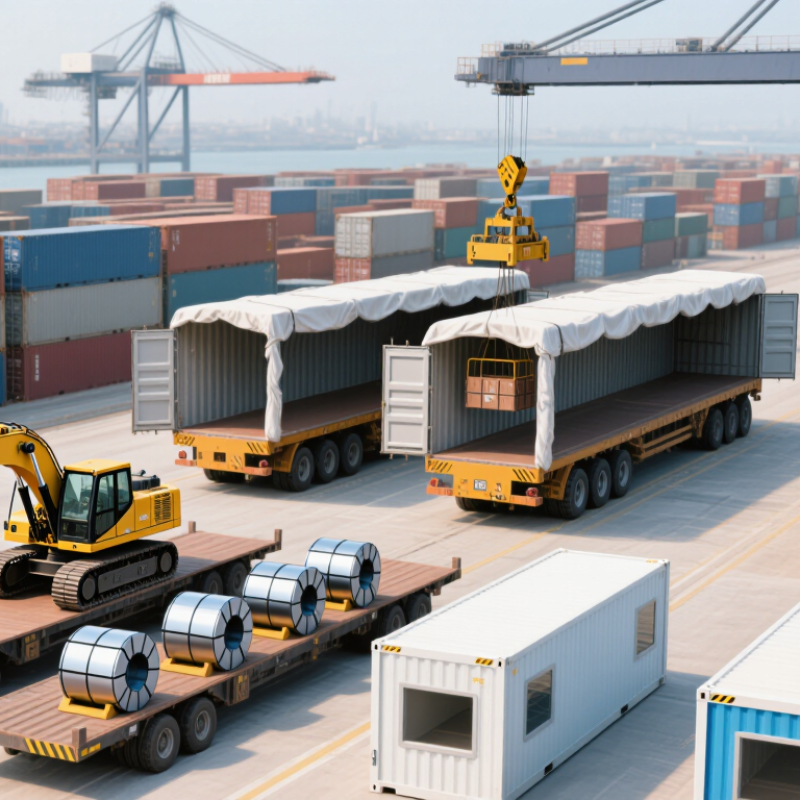
This guide examines the main steel container types used across international logistics, manufacturing, construction, storage, and specialized transport. Standard dry containers remain practical for boxed goods and palletized cargo. Open-top models support cranes and oversized loading. Flat rack containers handle heavy machinery, steel coils, timber, and equipment with unusual dimensions. Refrigerated and insulated units serve temperature-sensitive supply chains, while modified containers support workshops, secure storage, and project operations.

Technical details matter. Buyers should review external and internal dimensions, tare weight, maximum payload, door configuration, floor condition, ventilation, coating quality, and corner casting strength. ISO specifications and valid safety certification provide useful reference points, but paperwork alone cannot reveal every problem. A close inspection may uncover bent doors, hidden corrosion, or repaired flooring.

Experience often teaches an uncomfortable lesson: the cheapest unit can become the most expensive choice. Freight rates, inland transport, stacking limits, repair access, and local service availability can change the final cost. Some buyers also underestimate cleaning requirements and condensation risks. Small mistakes grow quickly.

The following overview compares leading Steel Containers for global buyers. It focuses on practical selection, dependable specifications, and realistic operating conditions. No single container fits every route. Good purchasing decisions begin with clear cargo information and honest evaluation.
2026 Top Steel Container Types for Global Buyers

Steel Container Basics and Global Market Classification

2026 Top Steel Container Types for Global Buyers

Steel Container Basics and Global Market Classification

Steel containers are classified by structure, function, and handling method. The common dry container uses corrugated steel walls, corner castings, and lockable doors. High-cube units add extra internal height for bulky cargo. Open-top containers support overhead loading, while flat racks handle machinery and oversized equipment. Insulated and refrigerated containers require stricter temperature controls. Tank containers carry approved liquids under specific technical standards.

ISO 668 defines key external dimensions and classifications. The CSC Convention also requires safety inspections before international transport. These standards matter because a container must fit cranes, chassis, vessels, and warehouse systems. UNCTAD’s Review of Maritime Transport 2024 reported approximately 858 million TEUs in global port throughput during 2023. That scale shows why dimensional consistency remains commercially important.

Steel demand also shapes container supply. World Steel Association data recorded about 1.89 billion tonnes of crude steel production in 2023. Buyers should compare steel grade, coating, floor design, payload, and inspection history. A cheaper unit may need repairs sooner. This is easy to underestimate. Classification alone does not prove quality. Regional weather, corrosion exposure, and handling habits can change the real service life. Industry reports provide useful benchmarks, but field inspection remains necessary before purchase.

Top Steel Container Types and Their Core Applications

2026 Top Steel Container Types for Global Buyers

Steel containers serve different cargo needs, and the right choice affects safety, cost, and handling speed. Standard dry containers are the most common option for boxed goods, machinery, furniture, and packaged materials. Their enclosed walls protect cargo from rain, dust, and routine handling impacts. Buyers should check floor condition, door seals, corner posts, and internal odors before purchase. Small defects can become expensive during long-distance transport.

Open-top containers suit tall or heavy cargo loaded by crane, such as stone blocks, industrial equipment, and timber. Their removable roof allows flexible loading, but weather protection needs careful planning. Flat racks support oversized machinery, steel structures, and vehicles that exceed standard container dimensions. They require accurate cargo measurements and certified lashing points. A few extra centimeters can affect route approval and handling fees.

Tank containers transport approved liquid products, including food-grade oils and other regulated industrial liquids. The tank material, valve design, insulation, and cleaning records require professional verification. Insulated and refrigerated steel containers support temperature-sensitive food, medicines, and chemicals within permitted conditions. Temperature logs matter more than attractive exterior paint. In practice, buyers sometimes focus on capacity and overlook maintenance history. That is a mistake. No container type fits every route, port, or cargo profile. Local transport rules, loading equipment, and inspection standards should shape the final decision.

2026 Top Steel Container Types for Global Buyers

Top Steel Container Types and Their Core Applications

Container Type Main Steel Construction / Features Common External Size Typical Payload Range Core Applications Relevant Standards / Notes
Standard Dry Van Weather-resistant steel frame, corrugated steel side panels, steel doors and timber or composite floor. 20 ft or 40 ft; high-cube versions are approximately 9 ft 6 in high. Approximately 21–28 t, depending on tare weight and local road limits. Packaged goods, machinery, furniture, textiles, consumer products and general cargo. Intermodal use under ISO 668 and related ISO container requirements; exact payload depends on the CSC safety plate.
High-Cube Dry Van Steel structural frame with increased internal height and volume compared with a standard-height dry van. 40 ft or 45 ft; external height is generally about 2.896 m. Approximately 26–29 t, subject to container design and transport regulations. Lightweight, high-volume cargo such as packaging, appliances, furniture and automotive components. Useful when cargo volume, rather than maximum mass, is the primary constraint.
Refrigerated Container (Reefer) Insulated steel enclosure with a powered refrigeration unit, insulated floor, air channels and temperature monitoring. Usually 20 ft or 40 ft high-cube. Approximately 25–29 t, depending on equipment and operating requirements. Fresh and frozen food, pharmaceuticals, biologics, flowers and temperature-sensitive chemicals. Requires electrical power during storage and transport; temperature range and airflow must be matched to the cargo.
Open-Top Container Steel body with a removable roof, commonly covered by a flexible tarpaulin; reinforced upper rails and doors. 20 ft or 40 ft. Approximately 21–28 t. Scrap metal, timber, stone, construction equipment and cargo loaded by crane or requiring extra height. Cargo height and securing method must remain within the container’s approved limits.
Flat Rack Container Heavy-duty steel base with fixed or collapsible end walls, lashing points and reinforced corner posts. 20 ft or 40 ft. Approximately 25–40 t, depending on type and approved rating. Oversized machinery, industrial modules, vehicles, steel products, pipes and heavy project cargo. Cargo may exceed standard width or height, but requires engineered securing and carrier acceptance.
Platform Container Reinforced steel platform with end walls omitted or minimized, designed for concentrated and project loads. 20 ft or 40 ft. Approximately 20–40 t, based on the platform’s rating and load distribution. Large transformers, pressure vessels, industrial machinery and cargo that cannot fit inside a framed container. Requires careful weight distribution, lashing design and confirmation of route clearances.
Tank Container Stainless-steel pressure vessel mounted inside a standard steel intermodal frame, with valves, insulation or heating options. Usually 20 ft; common capacities are about 14,000–26,000 litres. Often approximately 20–30 t, depending on liquid density and tank rating. Food-grade liquids, chemicals, fuels, liquid gases and other bulk liquids. Design may involve ISO 1496-3, CSC and dangerous-goods rules such as the IMDG Code; product compatibility is essential.
Ventilated Container Steel container with controlled passive ventilation openings to reduce condensation and heat buildup. Commonly 20 ft. Approximately 21–28 t. Coffee, cocoa, agricultural products, timber and other cargo needing airflow but not active refrigeration. Ventilation does not provide precise temperature or humidity control.
Insulated Container Steel shell with thermal insulation designed to slow heat transfer; generally operated without active refrigeration. 20 ft or 40 ft. Approximately 21–28 t. Short-duration temperature buffering, specialty food, heat-sensitive materials and selected industrial cargo. It delays temperature change but cannot replace a reefer for strict temperature control.
Swap Body Steel or steel-reinforced body designed for road–rail transfer, typically with folding legs and a non-stackable or limited-stack configuration. Common lengths include approximately 7.15 m, 7.45 m and 13.6 m. Typically about 20–28 t, subject to body design and road regulations. European road–rail freight, distribution networks, pallets, retail goods and regional logistics. Not every swap body is suitable for ocean shipping; verify lifting, stacking and terminal compatibility before purchase.

Note: Dimensions, payloads and equipment configurations are typical industry ranges. Buyers should confirm the container’s CSC safety plate, ISO specifications, cargo weight distribution, route restrictions and applicable dangerous-goods regulations before shipment.

Key Materials, Designs, Sizes, and Performance Features

In 2026, steel container selection will depend on material quality, not appearance alone.

World Steel Association data recorded 1.89 billion tonnes of crude steel production in 2023. That scale supports wider access to high-strength weathering steel, galvanized components, and certified structural parts. Weathering steel resists outdoor corrosion, but damaged coatings still need prompt repair. Neglected scratches become expensive failures.

Common designs include corrugated sidewalls, reinforced corner posts, locking bars, and double-leaf doors. Ventilation openings help reduce condensation inside closed units. Marine-grade plywood floors remain practical for repeated loading.

ISO 668 defines standard external dimensions, including 20-foot, 40-foot, and 40-foot high-cube formats. High-cube units provide extra internal height, but they may increase wind exposure and handling restrictions.

UNCTAD’s Review of Maritime Transport 2024 reported a global container ship fleet exceeding 28 million TEU in early 2024. Containers therefore need reliable stacking, lifting, and lashing performance across busy supply chains. ISO 1496-1 testing addresses these structural demands.

Buyers should verify payload ratings, door alignment, floor condition, and corrosion depth before purchase. A heavier container is not automatically stronger. The compromise is real. I would also request inspection records, because paint can hide repairs, uneven welds, or weakened corner castings. Small details decide service life.

How to Select Steel Containers for International Shipping

How to Select Steel Containers for International Shipping
Choosing a steel container starts with the cargo, not the container price. Measure the shipment, including pallets, packaging, and loading clearance. A standard dry container suits boxed goods, machinery, and many general cargoes. Bulky equipment may require an open-top or flat-rack design. Liquid cargo needs a purpose-built tank container with suitable certification.
Check the container’s external dimensions and maximum payload against the planned route. Port cranes, vessel limits, and road regulations can affect the usable choice. Inspect the steel panels for deep dents, rust perforation, and poor repairs. Doors should close evenly, while gaskets must block daylight and rain. The floor needs strength without chemical stains, loose boards, or exposed fasteners.
For long international voyages, moisture control deserves attention. Ventilation openings, desiccant placement, and moisture-resistant packaging can reduce condensation damage. Insulated containers may protect temperature-sensitive goods, but insulation alone does not replace active temperature control. That detail is easy to overlook. Review the container’s inspection plate, safety approval, tare weight, and maintenance records before booking. Requirements can vary by carrier, port, cargo type, and destination. A clean container may still be unsuitable if its certification has expired. Allow time for an independent inspection, even when the supplier provides recent photos. Photos miss odors, floor weakness, and door alignment problems. I would also leave loading space around fragile cargo; filling every corner looks efficient, but often creates handling damage.

Global Standards, Certifications, Costs, and Supplier Evaluation

Global buyers should treat steel containers as regulated equipment, not simple welded boxes. For intermodal use, check dimensions and performance against ISO 668 and ISO 1496-1. A valid CSC safety approval is essential when containers move internationally by sea. Requirements can differ for storage, transport, and specialized applications.

Request the container’s CSC plate, material certificates, welding records, and inspection reports. Confirm steel grade, coating thickness, door alignment, floor load rating, and corner fitting dimensions. Inspect welds for undercutting, porosity, and uneven finishing. Small defects often become serious after repeated lifting, salt exposure, and temperature changes.

Costs include steel, fabrication, coating, certification, inland delivery, duties, and future repairs. A low quotation can hide thinner panels, weaker floors, or incomplete documentation. It may not be economical. Compare suppliers using a written scorecard covering factory quality control, batch traceability, production capacity, inspection access, warranty terms, and response times. Ask for recent photographs and a sample inspection before placing a large order. However, photographs can be staged or outdated. Independent inspection remains worthwhile, especially for first-time suppliers and high-volume purchases. Keep every test record linked to the container’s serial number.

FAQS

What is a standard dry steel container?

It usually has corrugated steel walls, corner castings, and lockable double-leaf doors. It suits general cargo. Ventilation openings can reduce condensation. Check door alignment and floor condition before buying.

When should buyers choose a high-cube container?

Choose one when cargo needs extra internal height. It works well for bulky cartons, furniture, or tall equipment. However, greater height can increase wind exposure and handling limits. More space is not always better.

What container suits oversized machinery?

Open-top containers allow loading from above with cranes. Flat racks support machinery and unusually wide equipment. Measure the cargo carefully, including height, width, and lifting points. A rushed measurement creates trouble.

What should buyers inspect before purchase?

Inspect corrosion depth, floor damage, door movement, welds, and corner castings. Look beneath fresh paint. Paint may hide repairs or weakened areas. Request recent inspection records and photographs of difficult areas.

Does a heavier steel container provide better quality?

Not necessarily. Strength depends on steel grade, structural design, weld quality, and corner details. A heavy unit can still have damaged floors or poor alignment. Compare payload ratings and inspection results, not weight alone.

How does weather affect container service life?

Coastal air, heavy rain, heat, and freezing conditions can accelerate corrosion. Scratches should receive prompt coating repairs. Neglected damage spreads quietly. Local weather matters more than a sales description suggests.

What standards are important for international transport?

ISO 668 covers key external dimensions and classifications. The CSC Convention requires safety inspections before international transport. ISO 1496-1 addresses structural testing for lifting, stacking, and lashing demands. Verify current documents before shipment.

What floor features should buyers consider?

Marine-grade plywood floors support repeated loading and unloading. Check for soft sections, cracks, stains, and damaged fasteners. A clean surface may still conceal weakness underneath. Walk across the entire floor.

What is the difference between insulated and refrigerated containers?

Insulated units reduce temperature changes around sensitive cargo. Refrigerated units require stricter temperature control and operating checks. Review insulation condition, seals, controls, and maintenance records. Temperature protection needs evidence, not promises.

How can buyers compare container value?

Compare steel grade, coating condition, floor design, payload, dimensions, and inspection history. Include future repair costs. A cheaper unit may need repairs sooner. The lowest price can become the most expensive choice.

Conclusion

Steel Containers are essential tools in global logistics, manufacturing, storage, and specialized transport. This article explains their basic structure and classification across international markets, covering common types such as general-purpose, open-top, flat-rack, insulated, liquid, and customized units. It compares their core applications while examining key factors including material grades, corrosion protection, structural design, internal capacity, standard dimensions, payload, stacking strength, and durability in demanding environments.

For international shipping, buyers should match container type, size, loading method, cargo characteristics, and operating conditions with the intended route and handling process. The article also highlights the importance of recognized global standards, safety certifications, inspection records, documentation, total ownership costs, maintenance requirements, and supplier reliability. By evaluating quality consistency, customization capability, delivery performance, after-sales support, and transparent pricing, global buyers can select Steel Containers that provide safe, efficient, and cost-effective performance across varied logistics and industrial applications.

Liam

Liam

Liam is a dedicated marketing professional with a profound expertise in the industry, where he excels at highlighting the unique advantages of our core products. With a keen understanding of market trends and consumer needs, Liam frequently updates our company’s professional blog, providing......